18 November 2026
Palatal Expanders for Kids: What They Are and What to Expect
At Ferris Orthodontic Group in Santa Barbara, Dr. Andrew Ferris and Dr. Rebecca Quinn use palatal expanders for kids to create space for adult teeth, correct bite problems, and make room for easier breathing.
The treatment is short, predictable, and far simpler at this age than it would be later. If you are wondering whether your child needs one, call us at (805) 687-7417 for a complimentary consultation. No commitment, no jargon, just answers. Learn more about orthodontic care in Santa Barbara for the whole family.
What Are Palatal Expanders for Kids?
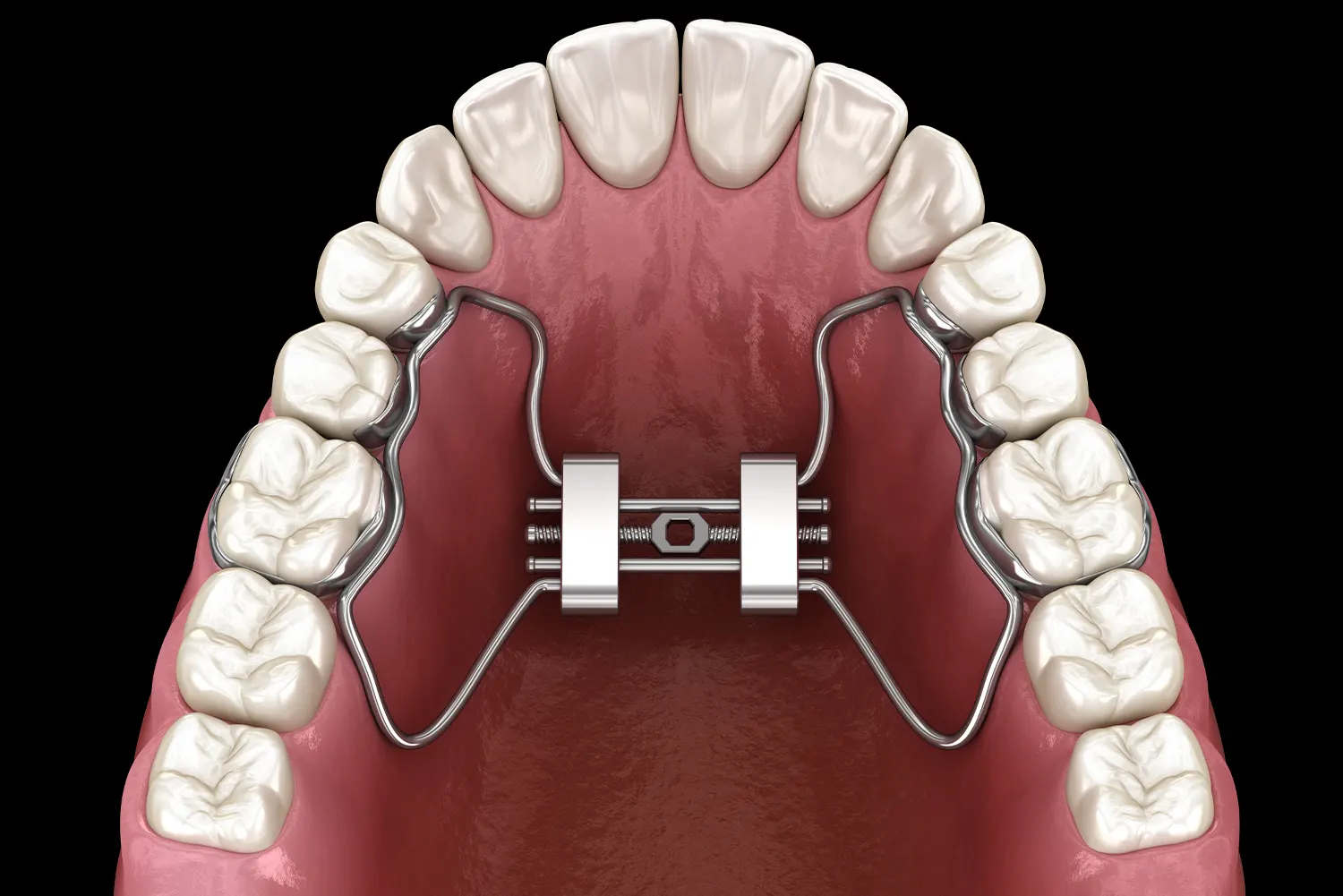
A palatal expander is a small orthodontic appliance that gently widens a child's upper jaw. It fits across the roof of the mouth and is adjusted slowly, usually with a tiny key at home, so the two halves of the upper jaw can grow apart while a child's bones are still flexible. Most kids who need one are between about 6 and 12 years old.
Expanders work with natural jaw growth instead of against it. The appliance is worn for several months, and most children adjust within a few days. A typical case has an active widening phase of a few weeks, followed by a longer period where the appliance stays in place so the new bone can firm up.
Signs Your Child May Have a Narrow Upper Jaw
A narrow upper jaw does not always look obvious from the outside. Parents often notice the effects first: crowded teeth, a bite that looks off, or a child who breathes through the mouth. Because we see your child's smile as it develops, we can often spot a narrow arch before the problem becomes harder to treat. Here are a few things that can point to a narrow upper jaw:
- Crowded or overlapping baby teeth, or adult teeth that come in with no room
- A high, narrow-looking roof of the mouth
- Regular mouth breathing, snoring, or restless sleep
- Upper teeth that seem to sit inside the lower teeth when biting down
- Thumb sucking or pacifier use that has continued past the toddler years
How We Confirm The Need For Palatal Expansion
We do not guess. Our team uses intraoral scanners, so there are no messy impressions, and CBCT 3D imaging when a closer look at the jaw and airway is helpful. These tools let Dr. Ferris and Dr. Quinn see exactly how much room your child has and how much widening is needed, and you can read about our orthodontic technology in more detail.
Crossbite in Children and Why Early Treatment Matters
A crossbite happens when some of the upper teeth close inside the lower teeth instead of outside. Crossbite in children is one of the most common reasons we recommend an expander. It is usually caused by an upper jaw that is too narrow to line up with the lower jaw.
What Happens If a Crossbite Is Left Alone
A child with a crossbite may shift their lower jaw to one side so the teeth can meet comfortably. Over time, that habit can lead to uneven jaw growth, extra wear on teeth, and a face that grows asymmetrically. The younger the child, the easier it is to guide the jaw into a healthier position.
Why Timing Helps
The two halves of the upper jaw are not fully fused in young children. That is why an expander can widen the jaw gradually and comfortably. In teens and adults, the same level of correction will require surgery. Catching it early keeps treatment simple.
How a Phase 1 Expander Works
A Phase 1 expander is part of early, or Phase 1, orthodontic care. The goal is not to finish all of your child's orthodontic treatment at once. It is to fix the underlying jaw problem first, so the next stage of orthodontic care, if necessary, is shorter and simpler. Our early interceptive Phase 1 orthodontics is built around this approach. Some children go on to braces or Invisalign as teens. Others need nothing more.
Explaining The Mechanics In Plain Language
The expander is a metal device that is anchored to the back teeth and has a small screw in the center. Each turn of the screw adds a tiny amount of width. The gentle pressure encourages new bone to form along the midline of the palate, and the teeth follow as the jaw widens.
Why You Might See a Gap
Many parents are surprised when a space appears between the two upper front teeth. This is normal and a sign that the expander is working. As treatment continues, those teeth will typically drift back together on their own.
What to Expect: From First Visit to Final Turn
Knowing the steps ahead of time helps kids feel calm. We explain each one to your child in kid-friendly language, and we show parents projected outcomes before treatment begins.
The Treatment Timeline
- Consultation and scans to confirm that an expander is the right choice
- A fitting visit, where the appliance is placed or bonded on the back teeth
- An active phase of about 3 to 6 weeks, with daily turns at home
- A retention phase of roughly 3 to 6 months, when the expander stays in place to hold the new width
- Removal, followed by a review of whether any further treatment is needed
What the Fitting Feels Like
Placing the expander usually takes one visit and does not hurt. Your child may feel pressure on the teeth and a full sensation in the mouth for a day or two. Speech can sound a little different at first, and most kids sort that out within a few days.
Daily Life with an Early Orthodontic Appliance
An early orthodontic appliance changes a child's routine a little, but it does not take over their life. With a few simple habits, most kids sail through treatment.
Eating and Cleaning
Sticky and hard foods like caramel, gum, popcorn, and hard candy can loosen or damage the appliance, so we ask families to skip them. Brushing matters even more with an expander, because food can collect around the metal. We show kids and parents how to brush the roof of the mouth and the bands, and a water flosser can make cleanup easier.
Turning the Key at Home
Turning the expander takes seconds. We walk parents through the first turn in the office, so you are never doing it alone for the first time. Most families do it at the same time each day, such as after brushing at night, which makes it easy to remember.
What Is Normal and What Is Not
Mild soreness, extra saliva, and a bit of tongue awkwardness are all normal. Call us if the appliance feels loose, a band comes off, or your child has pain that does not ease with a day or two of rest. We would much rather hear from you early.
How Dr. Ferris and Dr. Quinn Plan Treatment
Dr. Ferris and Dr. Quinn are ABO board-certified, and our practice is family-owned, not a corporate group. That means every treatment plan comes from the doctors, not from software. Dr. Ferris personally designs every tooth movement and also trains other orthodontists as a nationally recognized Invisalign educator. With more than 25,000 smiles transformed, we have seen how well early care works.
What Sets Our Approach Apart
Here is what families can count on when their child sees us:
- Digital scans and 3D imaging that show us the whole picture, not just the teeth
- A treatment plan designed by the doctors, with a clear explanation of the reasons behind it
- A clinical team that holds California Orthodontic Assistant Permits
- Honest advice, including when waiting is the better choice
- Spanish-speaking care for families who prefer it
When an Expander Is Not the Answer
Not every child with crowding needs an expander. Sometimes monitoring is the right call, and we will tell you so. We also look at airway concerns, and we offer expansion and sleep appliances through our airway treatment options when breathing is part of the picture.
Schedule a Complimentary Consultation for Your Child
If you have noticed signs of a narrow jaw, or your dentist has mentioned an expander, a visit with us is a good next step. We offer complimentary consultations at our offices in Santa Barbara and Goleta, so you can get answers without any pressure.
Call Ferris Orthodontic Group at (805) 687-7417 or schedule your consultation to book a visit with Dr. Ferris or Dr. Quinn. We will look at your child's bite, explain what we see in plain words, and help you decide what comes next.