Airway treatment in Santa Barbara & Goleta
Orthodontic care that goes beyond your smile
Airway-focused care at Ferris Orthodontic Group goes beyond straightening teeth. Using comprehensive evaluation and advanced 3D imaging, our doctors consider the airway alongside the bite, jaw development, tongue posture, and facial growth—creating a more complete picture to guide thoughtful, whole-patient care.







A more complete approach to airway evaluation & orthodontic care

Comprehensive evaluation beyond the teeth. We consider the bite, jaw growth, palate, tongue posture, facial development, and airway as part of the complete picture.
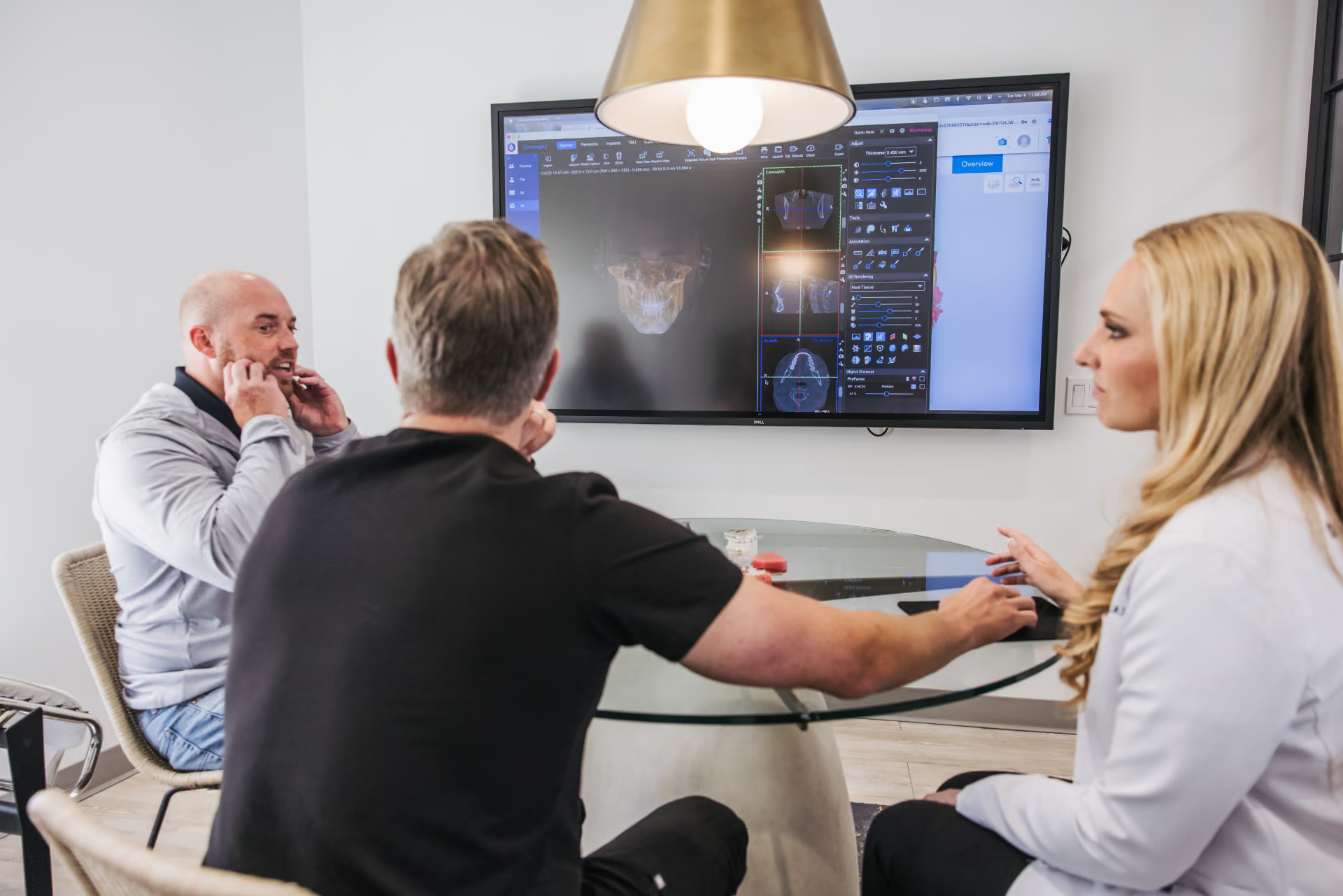
Advanced 3D imaging when indicated. CBCT imaging allows us to evaluate the teeth, jaws, developing structures, and airway anatomy in three dimensions.
Airway considered as part of the whole patient. Mouth breathing, snoring, sleep concerns, and oral function can provide important clues that deserve a closer look.
Collaborative care when needed. When concerns extend beyond orthodontics, we coordinate with ENTs, pediatricians, sleep specialists, myofunctional therapists, and other providers.
Understanding the whole picture starts with the right evaluation
At Ferris Orthodontic Group, airway evaluation is one part of a comprehensive orthodontic evaluation.
Using advanced imaging and a thorough clinical exam, our doctors look beyond the teeth to evaluate the bite, jaw development, palate, tongue posture, facial growth, and airway anatomy. For some patients, orthodontic treatment may be appropriate. For others, the best next step may be monitoring growth or collaborating with an ENT, pediatrician, sleep specialist, myofunctional therapist, or another provider. Our goal is to understand the whole picture first—then recommend what is truly appropriate for each patient.

Why airway matters in orthodontics
Growth, development & function
The bite, jaw relationships, palate width, tongue posture, and facial growth all develop together. Evaluating these factors helps our doctors understand the bigger picture—not just how the teeth are aligned.
Signs worth a closer look
Mouth breathing, snoring, restless sleep, certain tongue-posture patterns, or a narrow palate may signal that further evaluation is worthwhile. Our doctors consider these signs alongside each patient’s orthodontic and developmental findings.
The right care for the right concern
Sometimes orthodontic treatment can address a dental or skeletal issue that is part of the whole picture. Other concerns may require an ENT, pediatrician, sleep specialist, myofunctional therapist, or another provider. We help families understand the findings and determine the appropriate next step.
The airway evaluation & treatment process at Ferris Orthodontic Group

Step1
A comprehensive evaluation
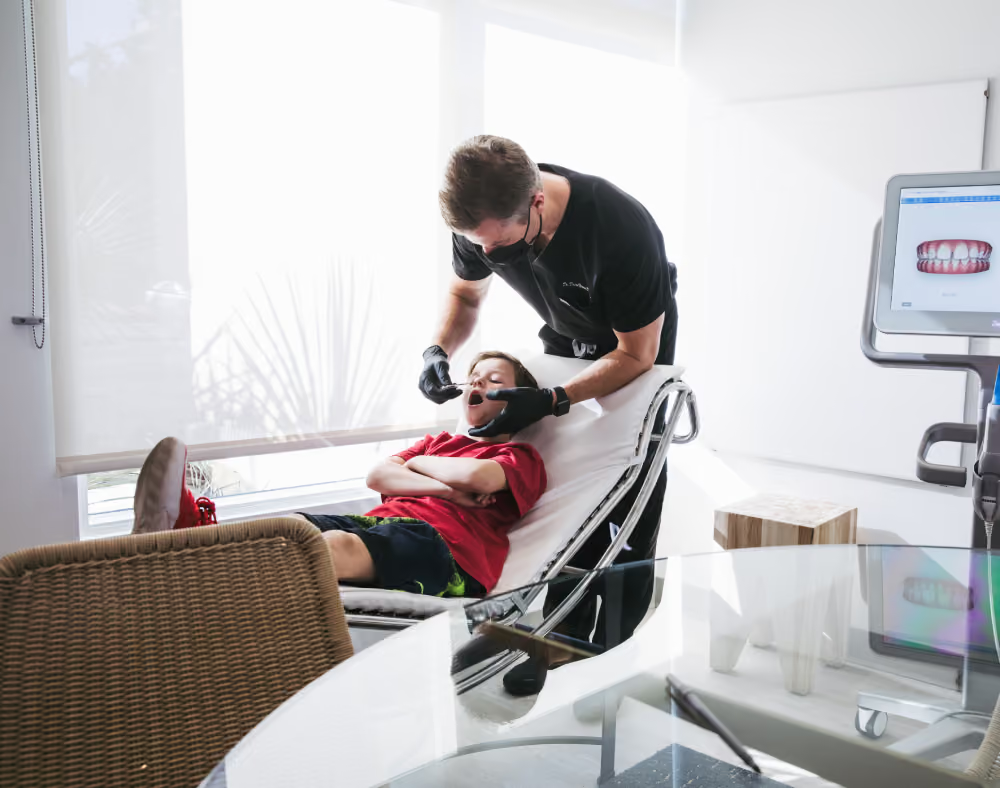
Our team begins with a detailed evaluation of your teeth, bite, jaws, facial growth, and airway-related anatomy. When appropriate, our doctors use advanced imaging such as CBCT scans to help them look beyond the teeth and identify structural or developmental factors that may warrant orthodontic treatment or further evaluation.
Step2
A personalized treatment plan
No two patients have the same needs. If orthodontic treatment can improve a dental or skeletal concern, we design a plan around your individual anatomy and stage of development. When findings fall outside the scope of orthodontics, we may recommend evaluation by an ENT, pediatrician, sleep specialist, myofunctional therapist, or other appropriate provider.
Step3
Treatment, monitoring, and long-term support
Throughout treatment, we closely monitor growth, tooth movement, bite development, and the goals established at your evaluation. When other providers are involved, we coordinate care as appropriate—keeping orthodontic treatment focused on creating a healthy, functional, stable result.
Frequently asked questions
Some signs that may be associated with airway concerns include mouth breathing, snoring, restless sleep, difficulty concentrating, or a narrow jaw. These signs can have many causes, which is why a comprehensive evaluation is important. During your visit, we assess airway as part of a broader orthodontic exam, using 3D imaging to evaluate the airway and surrounding structures—rather than relying on surface observations alone. This helps us determine whether further evaluation or treatment may be appropriate.
In certain cases, orthodontic treatment can help support better breathing by addressing structural factors such as jaw position, arch development, and the width of the palate. By creating more space within the dental arches and supporting proper jaw alignment, treatment may help improve airflow through the nasal passages and airway. Some patients also notice improvements in sleep quality, snoring, or daytime energy as these structural relationships are addressed. Because airway and sleep concerns are complex and often multifactorial, treatment is always approached thoughtfully and, when appropriate, in coordination with other healthcare providers such as ENTs or sleep specialists.
Airway-focused orthodontics evaluates how the teeth, jaw, and facial structure may contribute to breathing patterns and airway space. This often includes assessing factors such as a narrow palate, jaw positioning, and overall airway dimensions using advanced imaging like CBCT. Sleep apnea, on the other hand, is a medical condition that is diagnosed and managed by a physician, typically through sleep studies and medical evaluation. While the two can overlap, they are not the same. In some cases, orthodontic treatment may be one part of a broader, collaborative approach to improving airway function, alongside care from sleep specialists, ENTs, or other providers.
An airway evaluation is especially important in growing children, as early development of the jaws and airway can influence breathing patterns, sleep quality, and facial growth over time. In some cases, early orthodontic intervention—such as guiding jaw development or expanding a narrow palate—may help create more space for proper airflow and support healthy development.
That said, airway-focused evaluation can also be valuable for teens and adults. Treatment options vary based on age, anatomy, and goals, and may range from orthodontic alignment to coordinated care with other healthcare providers. A consultation allows us to evaluate your specific needs and determine whether airway-focused care is appropriate.
This is one of the most common questions we hear—and the answer depends on what we see during your evaluation. In many cases, what appears to be a need for “airway treatment” can be addressed through thoughtfully planned orthodontic care. By evaluating factors such as jaw position, arch development, palate width, and overall airway space using advanced imaging like CBCT, we’re able to determine whether there are structural considerations that should be incorporated into your treatment plan. For some patients, orthodontic treatment alone is sufficient. For others, we may recommend a more comprehensive or collaborative approach, which could include coordination with ENTs, sleep specialists, or other providers. Our goal is not to fit you into a specific category, but to fully understand your anatomy, symptoms, and goals—and design a treatment plan that reflects the complete picture.